
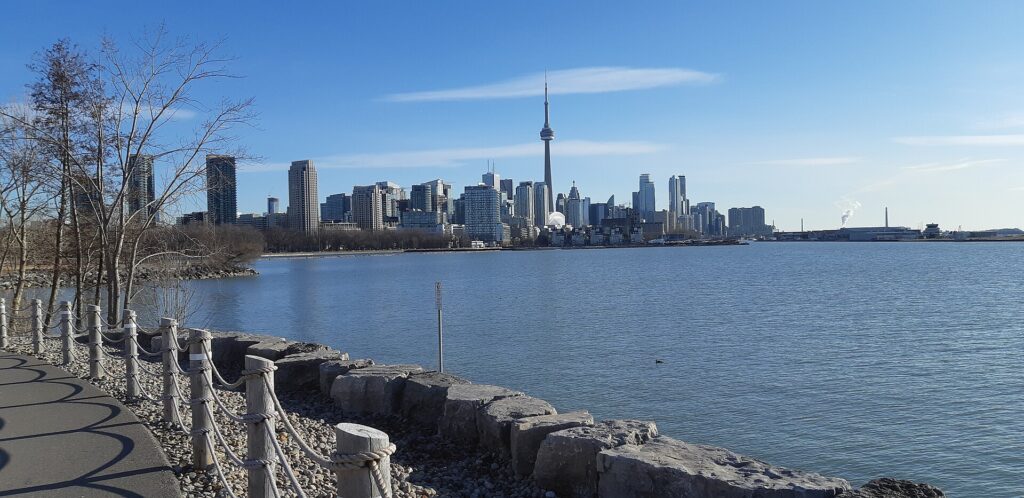
The Toronto housing market slowed again in October 2026. According to the Toronto Regional Real Estate Board (TRREB), 5,603 homes sold across the Greater Toronto Area, 7.9% fewer than in October 2025, and the benchmark price fell 4.3% from a year earlier to $916,400. The average selling price was $1,024,108, down 2.7%. For buyers, that means more room to negotiate. For sellers, it means the asking price has to be realistic from day one.
Here is what the October numbers show, how they line up against the Bank of Canada’s rate hike at the end of October, and what to check before you buy or list this winter.
Toronto housing market in October 2026: the key numbers
TRREB’s Market Watch report for October, released on November 4, 2026, describes a market where both sides are holding back. New listings dropped 11.9% year over year to 14,173, and there were 25,098 active listings at the end of the month, down 10%. Fewer listings would normally firm up prices, but sales fell as well, so the balance still favours buyers.
There was one small bright spot. On a seasonally adjusted basis, sales, new listings, the benchmark price and the average price all edged up from September. One month is not a trend, but it suggests the slide is not speeding up.
Homes spent an average of 31 days on the market, the same as a year ago, and the average home sold for about 97% of its final asking price.
Condos are falling fastest, detached homes the least
The split by property type tells you more than the headline figure:
| Home type (GTA) | Sales (change) | Average price | Price change, year over year |
|---|---|---|---|
| Detached | 2,693 (-4.4%) | $1,310,627 | -3.2% |
| Semi-detached | 546 (-8.1%) | $1,024,907 | -0.8% |
| Townhouse | 933 (-11.0%) | $804,416 | -5.0% |
| Condo apartment | 1,385 (-10.4%) | $621,400 | -5.8% |
Inside the City of Toronto (the 416 area), condo apartments averaged $659,214, down 5.6%, while townhouses actually rose 4.2% to $927,804. In the 905 suburbs every home type fell, with townhouses down 7.9% and detached homes down 4.7%. If you are shopping for a condo, the data backs up what many buyers already sense: there is plenty of choice and sellers are under pressure.
Lower prices or a higher rate: which matters more?
On October 28, 2026, the Bank of Canada raised its policy rate by a quarter point to 2.50%, its first increase in more than three years, and the big banks lifted prime to 4.70%. Our Bank of Canada rate hike explainer covers what that means for variable and HELOC payments. TRREB says lower prices have offset much of the impact of higher borrowing costs, and the arithmetic bears that out.
Take the average GTA condo apartment. A year ago, with prices 5.8% higher, it would have cost roughly $659,700. Today it averages $621,400, about $38,300 less. With 20% down and a 25-year amortization at an illustrative 4.50% five-year fixed rate (compounded semi-annually, as Canadian mortgages are):
- A $497,120 mortgage at today’s average price costs about $2,751 a month.
- A $527,728 mortgage at last year’s average price, same rate, would cost about $2,921 a month.
- Today’s mortgage at 4.75%, a quarter point higher, costs about $2,821 a month.
So the lower price saves around $170 a month, while a quarter-point rate rise adds about $70. You still have to pass the federal stress test, which for an uninsured mortgage means qualifying at the greater of your contract rate plus two points or 5.25%. At 6.50%, the qualifying payment on that $497,120 loan is about $3,330 a month, and your income has to support that figure, not the $2,751. Our Affordability Calculator runs the same check with your own numbers.
What it means if you are buying, selling or renewing
Buyers. TRREB’s chief information officer, Jason Mercer, said buyers “continued to benefit from substantial negotiating power on price.” You can see it in the 97% sale-to-list ratio. Before you offer, look at recent sold prices in the same building or street rather than the asking price. If you are still deciding whether to buy at all, our rent vs buy in Toronto breakdown compares the monthly costs.
Sellers. With more than 25,000 homes for sale, an overpriced listing tends to sit. Price close to recent comparable sales and expect buyers to ask for conditions.
Owners renewing in 2026 or 2027. Fixed rates track Government of Canada bond yields more closely than the overnight rate. In a forecast reported on November 10, Moody’s said fixed mortgage rates could rise in 2027 even if the Bank of Canada holds steady, and expects Toronto and Vancouver to lag the national recovery. That is a forecast, not a certainty, but it is a reason to run your renewal numbers early with our Mortgage Calculator.
What to watch next
The Bank of Canada’s next rate decision is on December 9, 2026, and TRREB’s November figures follow in early December. For the wider picture beyond the GTA, see our Canada housing market 2026 overview.
FAQ
Is the Toronto housing market going down?
Prices are lower than a year ago. The GTA benchmark price was down 4.3% in October 2026 and the average price down 2.7%. On a seasonally adjusted basis, prices edged up slightly from September, so the decline is not accelerating.
What is the average house price in Toronto right now?
Across the GTA, the average selling price in October 2026 was $1,024,108. Detached homes averaged $1,310,627 and condo apartments $621,400. Inside the City of Toronto, a detached home averaged $1,603,886.
Is it a good time to buy a condo in Toronto?
Condo prices are falling fastest, down 5.8% across the GTA, so buyers have more choice and more bargaining power. Whether it suits you depends on how long you plan to stay, whether you pass the stress test, and the building’s finances.
Related tools: Mortgage Calculator · Affordability Calculator · Closing Costs & Land Transfer Tax Calculator · Rent vs Buy Calculator · All tools & checklists
Sources: TRREB, Market Watch October 2026 (released November 4, 2026); Bank of Canada, interest rate announcement, October 28, 2026; OSFI minimum qualifying rate guideline; Canadian Mortgage Trends, Moody’s outlook, November 10, 2026. Figures checked November 10, 2026. The 2.50% policy rate is in force; the Moody’s rate outlook is a forecast. The 4.50% rate in the example is illustrative, not a quote.
This article is general information, not financial, legal or mortgage advice. Speak to a licensed mortgage professional or real estate lawyer about your own situation.