
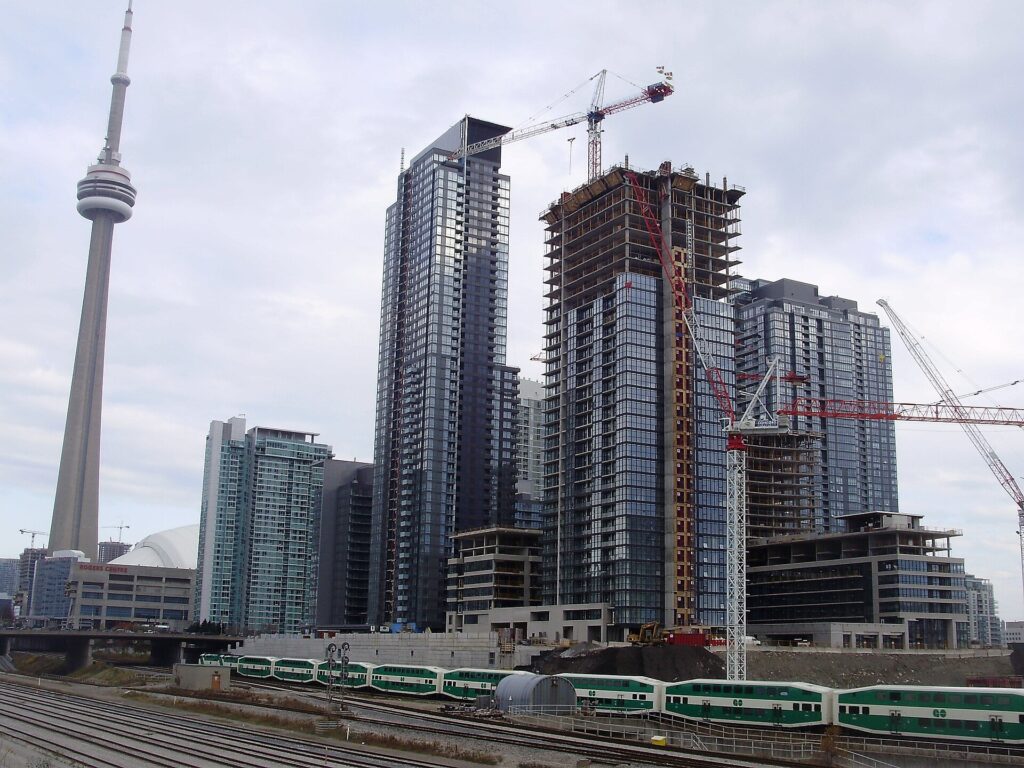
Is it cheaper to rent or buy in Toronto right now? On today’s numbers, renting a one-bedroom costs roughly $1,969 a month, while owning an average-priced City of Toronto condo with 10% down costs around $4,380 a month once you add the mortgage, property tax and condo fees. About $1,065 of that ownership cost is principal you keep, but even after taking it out, the rent vs buy gap in Toronto is still well over $1,000 a month in the renter’s favour.
That doesn’t settle the question for everyone. It does mean buying only comes out ahead if prices rise, you stay long enough to spread out the closing costs, or you would otherwise spend the money you save by renting. Here is how the comparison works, with the numbers behind it.
Rent vs buy in Toronto: the starting numbers
The Toronto Regional Real Estate Board (TRREB) reported that the average condo apartment in the City of Toronto sold for $640,248 in September 2026, down 6.1% from a year earlier. Across the whole GTA, the average price for all home types was $1,006,409, down 5.1%. Rents have eased too: liv.rent’s October 2026 report puts the average unfurnished one-bedroom in Toronto at $1,969, down 3.7% year over year.
One caution before the maths. The average condo sale includes two-bedroom units and bigger suites, so it isn’t a perfect match for a one-bedroom rental. If you are comparing like for like, look up rents for the exact unit type you would buy. A downtown two-bedroom, for example, was renting for about $2,825 in the same report.
What owning a $640,000 condo costs each month
Here is a worked example for a first-time buyer putting 10% down. The rate is an illustration: NerdWallet’s Canadian rate table on November 5, 2026 showed big-bank insured five-year fixed rates starting at 4.73%, so we used 4.75% with a 25-year amortization.
| Monthly cost of buying | Amount |
|---|---|
| Mortgage payment ($576,000 loan + $17,856 CMHC premium at 4.75%) | $3,370 |
| Property tax (0.767311% on a $500,000 assessment) | $320 |
| Condo fees (assumed) | $650 |
| Condo unit insurance (rough placeholder) | $40 |
| Total | $4,380 |
In the first year, about $2,305 a month of the mortgage payment is interest and about $1,065 is principal. Add up the parts you don’t get back (interest, tax, fees and insurance) and you are at roughly $3,315 a month. That is the fairest number to hold up against rent, because rent is also money you don’t get back.
The property tax line needs a word of explanation. Toronto’s 2026 residential rate is 0.767311%, but it is charged on your MPAC assessment, not your purchase price. Ontario assessments for the 2026 tax year are still based on values as of January 1, 2016, so many condos are assessed below what they sell for today. Check the actual assessment on the listing or the MPAC website rather than guessing.
The cash you need on closing day
The monthly view leaves out the money that goes out the door before you get the keys. On a $640,000 purchase in Toronto:
- Down payment: $64,000 at 10%.
- Land transfer tax: Toronto buyers pay both the Ontario tax and the City’s municipal tax, $9,275 each on this price, so $18,550 in total. First-time buyers can get up to $4,000 back from the province and up to $4,475 from the City, which brings it down to about $10,075.
- Sales tax on the CMHC premium: the premium itself is added to the mortgage, but Ontario’s 8% sales tax on it (about $1,428 here) has to be paid in cash at closing.
- Legal fees, title insurance and adjustments: typically a few thousand dollars more.
So a first-time buyer needs roughly $77,000 to $80,000 in cash. A renter can keep that money invested, and that lost investment return is a real cost of buying that many rent vs buy comparisons leave out.
When buying starts to win
Using the example above, the owner spends about $1,346 a month more in unrecoverable costs than the renter ($3,315 against $1,969), or about $16,000 a year. If the renter’s $77,000 earns even 4% a year, that adds about $3,000 more. To come out ahead, the condo has to gain roughly $19,000 a year in value, which is about 3% a year on a $640,000 unit. Selling costs push that hurdle higher if you sell within a few years.
Prices fell over the last year, so nobody should assume 3% growth is guaranteed. On the other hand, buying in a soft market means you are not paying peak prices, and a fixed rate locks in your biggest cost for five years while rents can rise once a unit turns over. The answer comes down to how long you plan to stay and whether you will actually invest the savings if you rent.
Our Rent vs Buy Calculator runs this comparison month by month with your own numbers, and the Closing Costs & Land Transfer Tax Calculator gives the exact Ontario and Toronto tax for any price. For a deeper look at the closing bill, see our guide to land transfer tax and closing costs in Ontario.
Quick questions
Is rent going up or down in Toronto?
Down for now. Average one-bedroom asking rents were 3.7% lower in October 2026 than a year earlier, according to liv.rent. That helps renters who are moving, but rents on new leases can climb again when supply tightens.
Does putting 20% down change the answer?
It removes the CMHC premium and lowers the monthly payment, but it also ties up more cash that could be earning a return elsewhere. Try both scenarios in the Down Payment & Mortgage Insurance Calculator.
How long do I need to stay for buying to make sense?
There is no fixed number, but closing costs of $10,000 to $20,000 plus selling costs later are hard to recover in less than five years unless prices rise quickly.
Buyers with less than 20% down also pay mortgage default insurance; see how CMHC insurance premiums are worked out before you compare renting and buying.
Related tools: Rent vs Buy Calculator · Closing Costs & Land Transfer Tax Calculator · Down Payment & Mortgage Insurance Calculator · Property Tax Estimator · All tools & checklists
Sources: TRREB Market Watch, September 2026; liv.rent October 2026 Ontario Rent Report; City of Toronto, 2026 property tax rates; Ontario.ca, calculating land transfer tax; City of Toronto MLTT rebate rules; CMHC premium schedule; NerdWallet Canada rate table (Nov 5, 2026); Ryan LLC on MPAC’s 2016 valuation date. Figures checked November 6, 2026. All rules described are in force; the monthly example uses assumed fees, insurance and assessment.
This article is general information, not financial, legal or tax advice. Confirm current rates and costs with a licensed mortgage professional and your lawyer before you buy.