
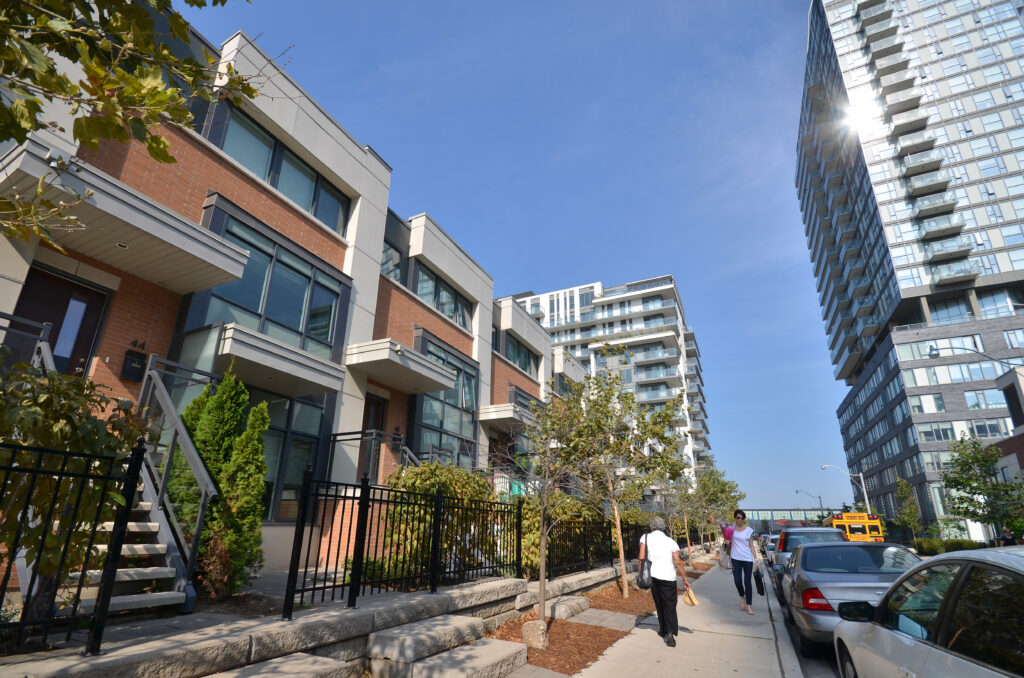
Ask a real estate agent in Toronto what buyers forget to budget for, and land transfer tax comes up almost every time. Unlike a home inspection or a lawyer’s bill, it isn’t optional and it isn’t small: on an average resale home in the city, it can easily be the single largest cash expense after the down payment itself. Ontario buyers pay two separate land transfer taxes if the property sits inside Toronto, one to the province and one to the city, and the brackets on both climbed again this year.
Ontario’s Land Transfer Tax Brackets
Ontario charges Land Transfer Tax on a sliding scale, and every buyer in the province pays it regardless of which city or town the home is in. According to the Ministry of Finance, the rate is 0.5% on the first $55,000 of the purchase price, 1.0% on the portion from $55,000 to $250,000, 1.5% from $250,000 to $400,000, and 2.0% on anything above $400,000. A separate 2.5% band applies above $2,000,000 for land containing one or two single-family residences. On a $700,000 resale home, that works out to roughly $10,475 in provincial tax alone, before any rebate.
Toronto’s Second Tax: The Municipal Land Transfer Tax
Buy inside the City of Toronto and the province’s tax is only half the bill. The city layers its own Municipal Land Transfer Tax (MLTT) on top, using brackets that mirror the provincial ones up to $3 million. Above that, Toronto City Council passed new graduated rates for high-value one- and two-unit residential properties that took effect April 1, 2026: 4.40% from $3 million to $4 million, 5.45% from $4 million to $5 million, 6.50% from $5 million to $10 million, 7.55% from $10 million to $20 million, and 8.60% above $20 million, according to the City of Toronto. For a typical detached or semi-detached purchase under $3 million, the MLTT simply duplicates the provincial brackets, so a Toronto buyer’s total land transfer tax bill is close to double what the same purchase price would cost just outside the city limits in Mississauga or Vaughan.
The First-Time Buyer Rebate: Up to $8,475 Back in Toronto
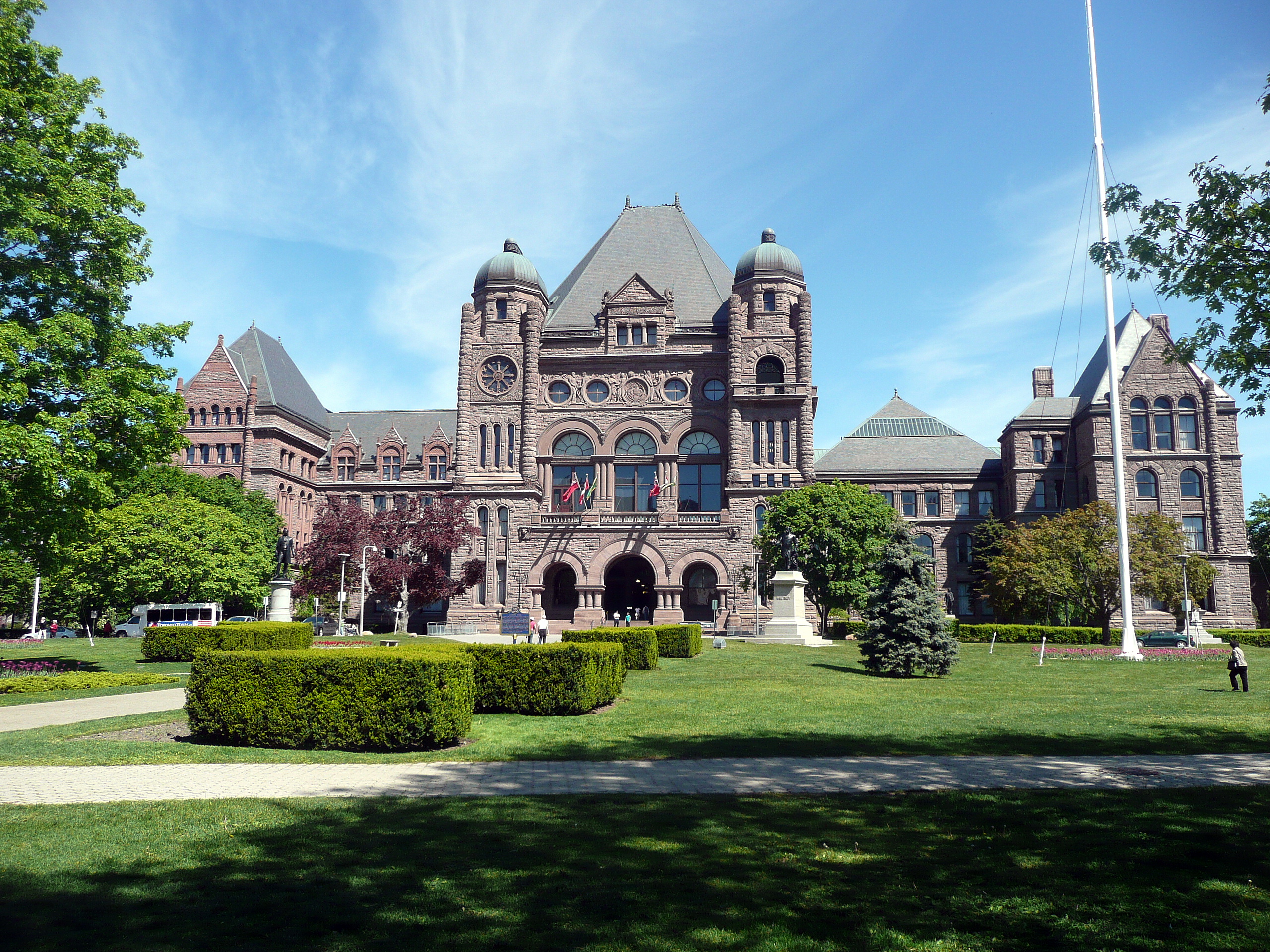
Both levels of government offer a rebate that can cancel out most or all of this tax for a first home. Ontario’s refund, per the Ministry of Finance, is capped at $4,000 and fully offsets the provincial tax on homes priced up to $368,000; above that price, the full $4,000 still applies against whatever is owed. To qualify, a buyer must be at least 18, be a Canadian citizen or permanent resident, have never owned a home (or an interest in one) anywhere in the world, and move in as their principal residence within nine months of closing – and if they’re married, their spouse has to meet the “never owned” test too. Toronto runs a parallel program on the municipal side with a maximum rebate of $4,475. Stack both and a first-time buyer in Toronto can have up to $8,475 wiped off their combined land transfer tax bill, though the city and province each review eligibility separately and the paperwork has to be filed through each program on its own.
Legal Fees, Title Insurance, and Inspection Costs
Land transfer tax dominates the bill, but it isn’t the only line. RBC’s home-buying guidance puts typical real estate lawyer fees in Ontario at $500 to $1,500 plus provincial sales tax on the legal bill itself, title insurance at roughly $300 on a $500,000 purchase (it’s optional but almost always recommended by lenders and lawyers alike), and a home inspection at $300 to $500 depending on the property’s size and condition. Buyers who need a property survey, which isn’t always required for a resale condo but often is for a detached home without a recent one on file, should budget separately for that as well, since costs vary widely by lot and location.
Budgeting the Full 1.5% to 4%
CMHC’s general guidance, cited by RBC, is to set aside 1.5% to 4% of the purchase price for closing costs on top of the down payment – and in Toronto specifically, buyers should plan toward the higher end of that range, or above it, once both land transfer taxes are included. On a $700,000 purchase, that’s a combined land transfer tax bill near $20,950 before any rebate, plus roughly $1,000 to $2,500 more for legal fees, title insurance, and inspection. First-time buyers eligible for both rebates can cut the tax portion by $8,475, which is often the difference between a comfortable closing day and a scramble to find extra cash at the lawyer’s office.
Why Two Tax Bills Catch So Many Buyers Off Guard
Buyers moving to Toronto from elsewhere in Ontario, or from another province entirely, are often the ones most surprised at the lawyer’s office, because nowhere else in Canada stacks a municipal land transfer tax on top of a provincial one at this scale. The fix is simple but easy to skip: ask for a written closing cost estimate, specific to the property’s price and the municipality it’s in, before writing an offer – not after. With Toronto’s two-tax structure and this year’s higher brackets on luxury properties, that one extra question can be worth thousands of dollars in avoided surprises.
Related tools
- Closing Costs & Land Transfer Tax Calculator: land transfer tax, stamp duty and closing costs by province, state or nation
- Affordability Calculator: how much home your income can support
- First-Time Buyer Savings Planner: FHSA, Home Buyers’ Plan, IRA exception and Lifetime ISA
Browse all our free tools and checklists, or find quick answers in our FAQ.